From data to action: strengthening environmental information for communities
On 10 February 2026, Open Development Cambodia (ODC) organized a half-day workshop titled Strengthening the Impact of Environmental, Land, and Natural Resource Data. The workshop was attended by 23 participants, including 12 female participants, representing CSOs members from Phnom Penh, Kampot, Ratanakiri, Koh Kong, and Stung Treng.
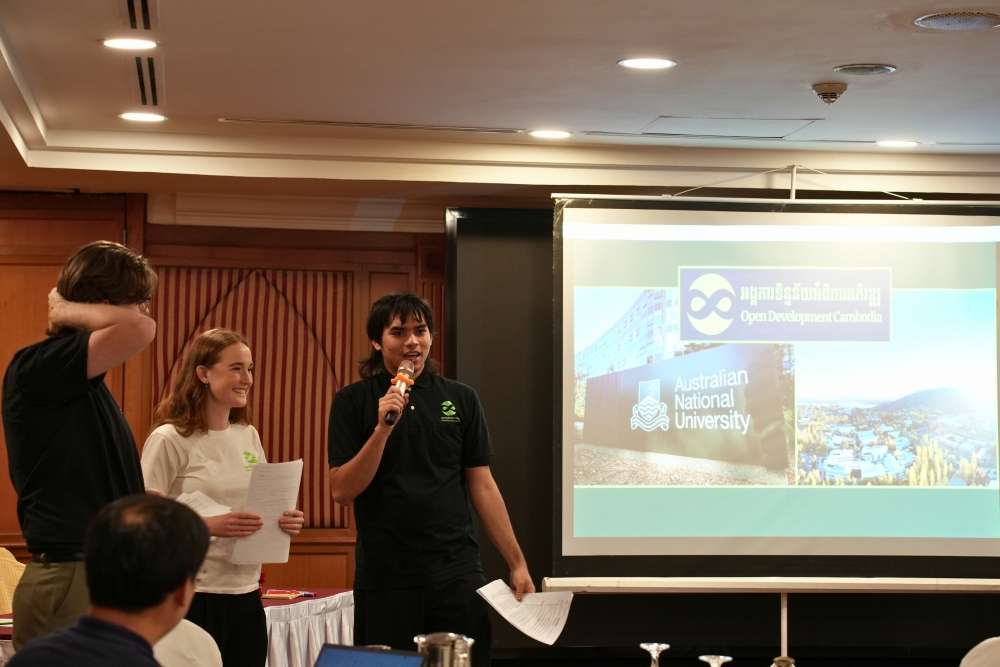
This workshop was a key outcome of the internship collaboration between ODC and the Australian National University (ANU). Four ANU interns, Ms. Katie Macdonald, Ms. Indah Jenkins, Mr. Cody Williams, and Mr. David Back, conducted research titled Data for Development: Assessing the Use and Impact of ODC’s Environmental, Land, and Natural Resource Data. The ANU-ODC research project examines how stakeholders use ODC’s data, particularly environmental, land, and natural resource data, to assist decision-making, advocacy, reporting, and monitoring processes and research. By identifying strengths and gaps in current data use, the research aims to inform ODC’s strategic objectives and better support evidence-based policymaking, sustainable development,t and accountability in Cambodia.
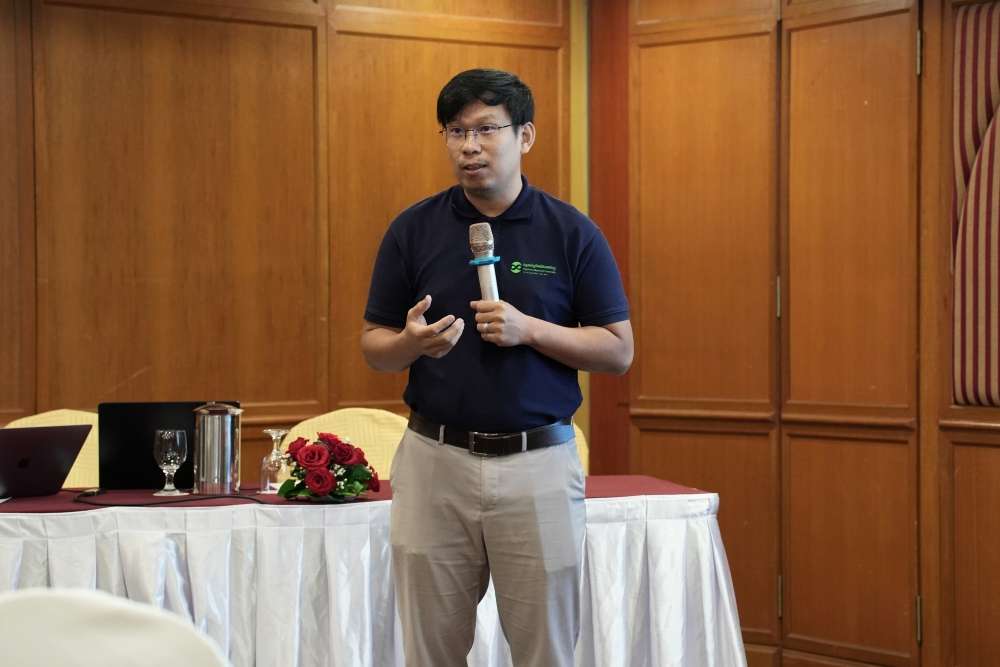
The workshop opened with remarks from Mr. Thy Try, Executive Director of ODC, who welcomed participants and highlighted the importance of stakeholder engagement in improving data accessibility, relevance, and impact. He reaffirmed ODC’s commitment to supporting evidence-based decision-making and ensuring data serves communities and civil society actors.
This was followed by a presentation from Mr. Loch Kalyan, Data Research and GIS Specialist at ODC, who introduced ODC’s core values, ODC’s platform, and key datasets related to land, environment, and natural resources. The presentation demonstrated how ODC data supports research, monitoring development projects, project planning, and stakeholder engagement.
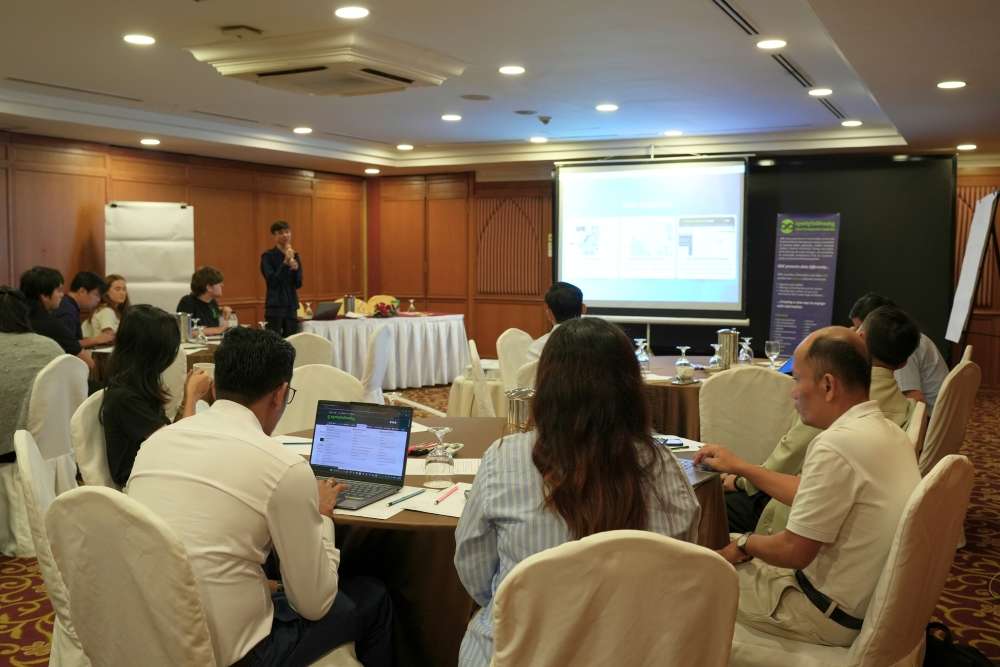
Participants shared feedback on improving data accessibility, particularly the need for more Khmer-language content and clearer translations of technical terms. They also suggested strengthening outreach through short social media content, explainer videos, and more regular website updates. Concerns were raised about outdated datasets, especially in sectors such as hydropower dams, extractive industries, and forest cover, while participants also requested additional resources such as photo documentation of protected areas and video guides to help communities navigate and use ODC datasets and platforms more effectively.
The ANU interns presented their research activities in Cambodia, explaining their engagement with stakeholders from government, civil society, communities, and media. Through group discussions, participants shared how they currently use land and environmental data for research, advocacy, project design, monitoring, and community awareness. They emphasized that reliable data strengthens engagement with authorities, supports evidence-based advocacy, and helps communities protect natural resources and livelihoods.
Participants noted that data is easier to use when it is well-structured, available in Khmer and English, visually presented, regularly updated, and supported by clear user guidance. However, challenges remain, including outdated data, language barriers, information overload, limited digital literacy at the community level, and difficulty accessing data via mobile devices.
Participants also discussed the challenges of communicating data and information to community stakeholders. Communication is more effective when data is credible, visual, and supported by trusted networks, and when communities receive assistance in organizing and validating information. However, communication becomes more difficult when digital literacy and internet access are limited in rural areas, when information is sensitive, or when there are gaps in trust, transparency, or engagement between communities and authorities. Limited financial and technical resources were also identified as barriers to effective communication and participation.
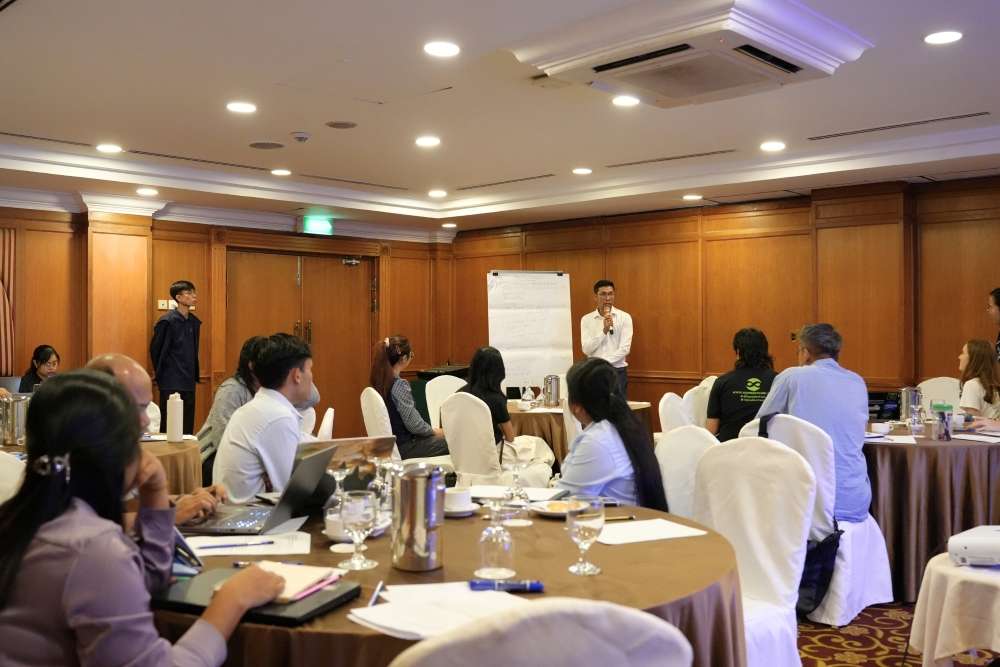
Overall, participants expressed strong appreciation for ODC as a trusted open data platform and knowledge resource, with one participant describing ODC as “like a teacher” in helping them understand environmental issues. They recommended strengthening user guidance, expanding training and capacity-building for communities and youth, updating datasets, organizing datasets more clearly, expanding coverage to additional sectors, and strengthening outreach at the community level.
The workshop concluded with an interactive session allowing participants to share priorities for ODC’s future work. The insights gathered from the workshop will help inform future improvements to ODC’s data platforms, outreach strategies, and capacity-building efforts, contributing to stronger evidence-based decision-making and sustainable development outcomes in Cambodia.

